
Blog

All of the blog posts contained within The Tech Teapot with the most recent at the top.

Network management's new wave six years on

How time flies.

It has been six years since I wrote about Network management’s “new wave” and thought it would be interesting to go back and see what has happened. We are now at the outer envelope of the VC funding cycle so things should be sorting themselves out one way or another.

The new wave was Hyperic, Zenoss and Groundwork Open Source VC funded, open source network management companies.

Open source wasn’t new to the network management scene in 2007, there had been well known projects, like Nagios, MRTG and OpenNMS, around for a number of years prior to that.
Why Monitoring Sucks

Found an interesting old post by John E. Vincent, Why Monitoring Sucks tweeted by MonkChips. What is interesting is what John did next. He created a GitHub account so that he could collaborate with people to rectify the problem.

The most interesting part (to me anyway) is the tools-repos repository in which all of the different monitoring tools are listed.

Enjoy! 😄

PS: as a counter point, read this post entitled #monitoringlove - a true story by Ulf MÃ¥nsson.

Continuous delivery every single day

It has taken 20 years as a professional programmer to get to this point, but I have finally taken the final step to continuous delivery.

We’ve been practising continuous integration for well over a year now. It seemed a logical step to deploy the software automatically. When a process is done manually you tend to make a lot of mistakes. I did anyway. I’d run the database upgrade script before the new one had been installed and of course I would take a long time performing the upgrade. The machine is able to do the upgrade in a matter of a few seconds, I used to take several heart thumping minutes to do the same job.

TimeTag fork away!

I finally got around to posting the TimeTag source code up on Google Code GitHub this afternoon. You can find the project here.

Whilst I’ve no intention of working on TimeTag, I figured that it would be useful for people learning PowerShell development to have a reasonably large sample available, and useful for someone to have a help up if they wanted to implement something similar and don’t fancy starting from scratch.

Feel free to fork…

Automated install comes to open source .NET projects

One of the nice things about Linux is the ability to install apps (and dependencies) very easily using apt-get or similar. Windows users have been missing a similar tool for a long time. Never fear, the Scottish Alt.Net group have written Hornget, a tool for installing open source .NET projects.

Quite a few projects are supported, though most are of interest only to programmers. It would be nice to see a lot more user oriented tools like games and the like.

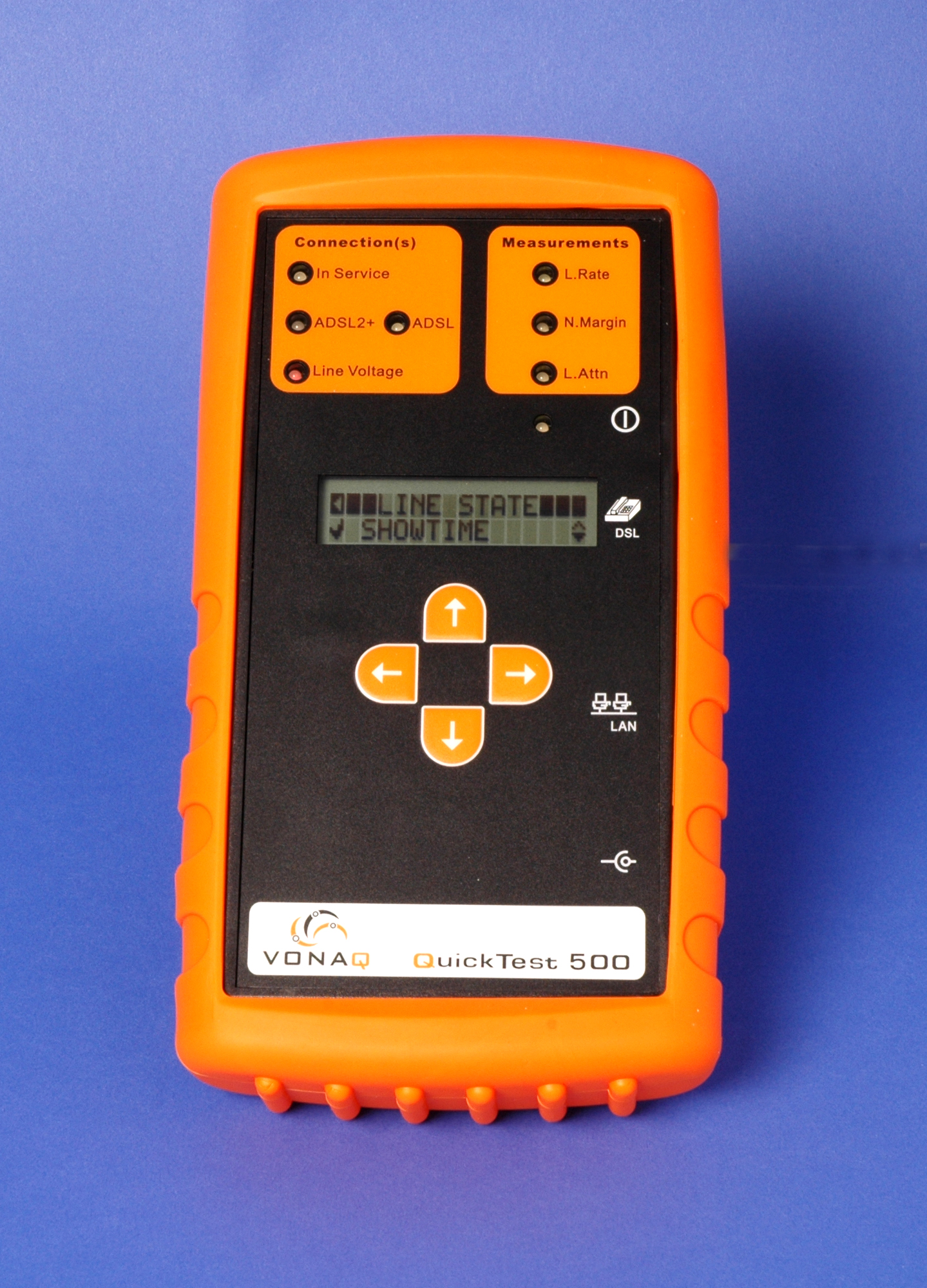
Review of the Quicktest 500 ADSL Tester

Quicktest 500 Front Photo

Front of the Vonaq Quicktest 500

The Quicktest 500 is reviewed by Brendan Mulvaney of Halcyon IT.

For a busy technician out in the field the Quicktest 500 is a great tool for the quick and detailed testing of adsl lines. Without resorting to a laptop with adsl modem attached you can use it to get the results that really matter - is the adsl service in a healthy state?

Technology lag

I was interested to see a blog post discussing the benefits of the new 4G wireless standards currently in development. It struck me just how long it really takes for a technology to be in use by the majority of people. Here we are at the dawn of the 4G world and yet 3G isn’t widely deployed. The 3G licences were auctioned in the UK around ten years ago.

I’ve had an Apple iPhone 3G for a few months now and I am able to use a 3G signal for a small fraction of the time. In fact, outside of major cities, you’ve very little chance of getting a decent 3G signal. Most of the time I’m stuck on GPRS speeds or worse. If 3G hasn’t spread outside of the main metropolitan areas ten years after the original spectrum auctions, then it seems likely that there is no business case for ever doing so. If it isn’t commercially viable to implement 3G then what hope is there for 4G?