
Open source network management comparison: General
A comparison of various open source network management tools.
Nagios is one of the most widely used open source IT monitoring systems. It is well known for its flexibility, its extensive plugin ecosystem, and its large and active community.
One side effect of the increased competition in open source network management is that it is becoming increasingly hard to choose which tool is right for you.
With that in mind I intend to create a comparison featuring the best known open source tools to make the process of choosing the right tool a little bit easier.
I’ll publish the comparison in tranches so that, by the end of it, a comprehensive comparison is available. The first tranches will present more general information. As the series progresses more detailed information will be presented.
Mark Hinkle from Zenoss sent me a link to an interesting document he prepared yesterday.
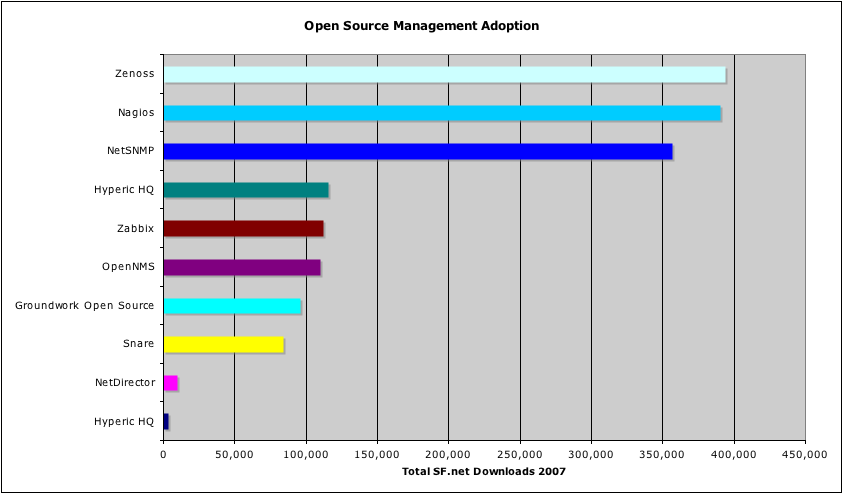
I think Mark may be over egging Zenoss clear market leadership but without any doubt their growth over the last year has been impressive.
Perhaps the most impressive thing to take away is that all of the projects featured have grown over the last year.
One of the great things about sourceforge, apart from the cool services they provide free to open source projects, is that they provide statistics about the projects they host.
One of the stats that sourceforge provides is a history of project downloads. You can’t compare the stats though. So I thought it would be interesting to compare the downloads for the major open source network management projects.
The volume of downloads is indicative, like search trends, of the relative mind share for each project. Download volume isn’t a perfect measure, but it is one of the best available. I doubt even the projects themselves have an absolutely accurate idea of how many installations they have.
Everybody loves Nagios, but let’s be honest, it can be a pain to set up, especially if you work in a Windows only environment. A few solutions do exist to make Nagios a little easier to get yourself up and running.
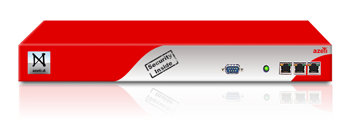
Hardware appliances take the hassle out of Nagios, for a price. You buy a rack mountable appliance with Nagios all ready to go. Just plug the device in, configure the network settings and off you go.